Saint Margaret of Cortona Recognized May 16th
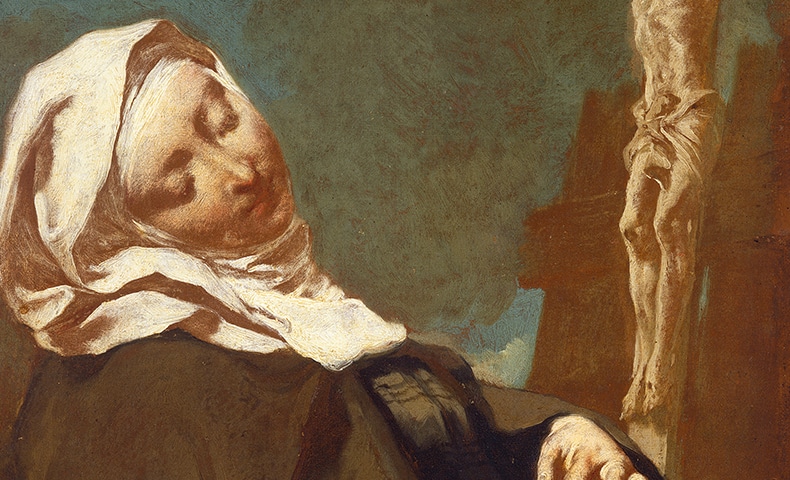
St. Margaret of Cortona was born in 1247 in Laviano, Italy, a small farming village. Her mother died when Margaret was only seven years old, and her father remarried. Her stepmother was not kind to Margaret, which resulted in her moving away from home with her lover Arsenio. She bore him a child out of wedlock.
One day, while awaiting Arsenio’s return, she was met with his frantic dog. She followed the pup and he led her into the forest where she found Arsenio murdered on the forest floor. The horrific loss shocked Margaret and she turned to a life of penance.
She attempted to return to her family in Laviano but was not well-received by her stepmother. After this, she travelled to Cortona, where her son became a friar and she became a Franciscan tertiary after her conversion. At Cortona she founded a hospital and a congregation for tertiary sisters.
She is remembered for her devotion to the passion of Christ, much like Saint Fracis, as well as her difficult and dramatic shift to a life of virtue and humility after years of struggling with sin.